Monday, May 14, 2012
Summer Con Season is upon us
I have some great stuff over the summer. I will share it after June. I'll keep you all posted.

Sunday, April 1, 2012
Bridges of Culture (3 of 3)

Comic Book artists are one of the vital links for bridges of culture. Mr. Steve Scott is a very talented comic artist who designed characters for DC and Marvel.
Bridge of Culture (2 of 3)

Another key link to the bridges of culture are voice actors. Voice Actors give life to 2-D and 3-D animated characters. I was fortunate to interview Ms. Veronica Taylor. Ms. Taylor is best known as the voice of Ash Ketchum from the popular series Pokemon. Ms. Taylor was a gracious person and fun interviewing. Please excuse the terrible audio because there were lots of people coming in and out of the green room.
Also listen toward the end of the interview for a really great audio treat.
Bridges of Culture People (1 of 3)
A bridge literally is a physical object that links between two items. A bridge could also be a metaphor for a person. Culture is a person's identity or tradition. People who are bridges of culture are an important aspect in human history.
In today's pop-culture, it takes a few special individuals to open a bridge to exchange new ideas.
I did these interviews at New York Comic Con 2010.
The first group of people who help contribute to be a link of culture is the New York Based group, Echostream.
In today's pop-culture, it takes a few special individuals to open a bridge to exchange new ideas.
I did these interviews at New York Comic Con 2010.
The first group of people who help contribute to be a link of culture is the New York Based group, Echostream.
Friday, March 30, 2012
AKB48 in DC


Loud music, tons of screaming fans, streams of neon, and cute girls singing Japanese Pop music. What a time to celebrate a party. 2012 marks the 100th anniversary of how the Japanese gave the US rows of Cherry Blossom Trees (Sakura) as a gift of friendship of the two nations. On Tuesday (March 27, 2012) the Japanese gave another gift. It wasn’t more cherry blossoms, but rather an all girl singing and dance troop known as AKB48.

AKB48 was in DC to help promote this year’s Cherry Blossom event. The J-pop group performed at the historic Lincoln Theater along U Street in Washington DC. The theater is not far from DC’s other famed establishment, Ben’s Chili Bowl restaurant. AKB48 had two sold out shows at the theater to the delight of their many fans.
The first sold out show started at 4pm, but some dedicated fans waiting until 8 am to get a coveted spot to see the group. Some fans came as far away as Japan, Mexico, and Canada. The concert had a strict “no photography” policy so, if you had a camera, they would take it away from you. When AKB48 performed in NYC a few years earlier, no such policy was in place. Many of the major Japanese broadcasters, such as NTV, TV Asahi, and TBS videotaped many fans waiting in the nice cool spring afternoon. During the second show, the fans had to change several times to stand in line. The staff didn’t really tell them why they did that.
After an hour and half of waiting the doors opened and the fans ran to the front of the theater, neon at the ready. Early that day AKB48 got to meet some local elementary school children. Monica Hesse of the Washington Post detailed what the group did. As a gift from the group, the same students got VIP seating to see the group at the Theater.
10 minutes prior to start of the show, the fans were screaming “A-K-B!” Then, the concert began with a flash of light to delight of the fans. The group was wearing a dress with pink Sakura highlights in the bottom. They sang two songs that were well known to their adoring fans.
After the third song the group made a brief introduction. Each member gave her first and last name. Then they said a special nickname along with a tidbit about themselves. Many of the members tried to speak as best English as they could. One of the newest members, Rina “Hirari” Hirata spoke perfect English. She told the audience that she spent time in Arizona. Hirari-chan asked the fans if they visited the Grand Canyon, which most of the fans cheered. The group then asked if the audience visited Japan and if they knew about AKB48. In the second show the group said they loved eating at Ben’s Chili Bowl. This drew a loud applause from the hometown crowd.
As soon as the introductions were over, the girls got right to what they did best, put on a great show. Three members sang one song in angelic costumes, and then just as magic three other members were dress in ragged clothes with matching hats. During that number the girls twirled the hats around with fans screaming each member’s nickname. Next up as another three girls in while frilly dresses with matching tambourines. The crowds were inundated with song after song with routines more elaborate than the last.
Finally came the last of the main number. The members wore matching blue dresses reminiscent of drum majorettes. They thanked the audience for their support during the March 11th Earthquake and Tsunami. The song was entitled “Sakura Kimi Naro.” The song started with School bells ringing in the start of the school day. This time of year is normally graduation for students in Japan. The fans used their glow sticks to flow back and forth like a neon river against the Sakura Colored lights. The members also pantomimed trees swaying back and forth. At the end of the song the crowd gave a standing ovation.
The fans wanted more so they shouted “Oncoru” or “Encore.” The group returned back wearing black and white dresses with matching black t-shirts. They then sang two more songs getting more upbeat than the next. Toward the end of the 2nd second show the girls looked tired, but they trotted forward following the “fighting spirit” (Ganbatte). It was like the group was drawing more energy from the fans and cheering them on. The group gave a final bow to the roaring audience.
First time fans and long time fans alike were entertained with a high-energy show. There will be a lot more Japanese related events early next month. Stay tuned to this blog for details.
Wednesday, March 9, 2011
Bridges of Culture (Stores)
Buying the newest international items would be fine for some people. They would buy the newest Asian imports from the nearest online store without a care in the world. But, there are a few people who are willing to venture outside his or her comfortable confines. They are willing to see what is beyond and share it will the rest of us. These few people and stores act like “bridges of culture” to other people around the world.
Below are just a few companies that have taken the big leap and communicated with other fans around the globe to see what they are like. Surprisingly their counterparts are exactly like them. The only difference is that they speak different languages. Having something in common is the greatest thing a fan can have. Trying to speak to each other will come later.
 (Photo by: Ichigo Black. Used with permission)
Ichigo Black is an alternative clothing company run by Sasha Thomas. She is currently attending Massachusetts College of Art and Design. She is majoring in Fashion design and has been sewing professionally for over 4 years. Sasha has a passion for Japanese street fashion. Her goal is to create Japanese inspired fashion for the US market that fits a person’s changing lifestyle.
 (Photo by: Brian S. Mah. Used with permission)
Mandarake has been the place for all things Japanese pop-culture for over 30 years. With its humble beginnings as a bookstore in western Tokyo, Mandarake has become a destination for fans of Anime, Manga, and video games from around the world. Mr. Kono from the Mandarake’s international office was gracious enough to answer some questions regarding bridges of culture.
 (Photo by: Brian S. Mah. Used with permission)
GAMETECH is a Japanese company based in Fukuoka, Japan. The company specializes in custom cases for the PSP, iPhone, and iPod models. The designs come in typical Japanese names, WaSaBi, Kataki, Yawaraka, Miyabi, and Iki. Gametech had a booth at New York Comic Con 2010 with many people trying to buy these cool designs from Southern Japan. Mr. Morita was kind enough to answer some questions.
------
1. How long have you been selling products?
-----
Ichigo Black: 6 years total, but I've been selling under the name "Ichigo Black" for 2 years only.
Mandarake: We have been doing business in Nakano Broadway building since 1980.
GAMETECH: Our Company was founded in 1985; it‘s our 25th Anniversary. We have released more than 1,500 items since then.
-----
2. How long have you been a fan of Japanese popular culture?
-----
Ichigo Black: For as long as I can remember! Going to Japan had been a dream of mine to experience it all for myself since I was a kid.
Mandarake: Some of our staff loves American toys as well, but we mainly focus on Japanese culture.
GAMETECH: We have been doing business in Japan. Lately we have just started studying about the U.S. culture.
-----
3. Have you noticed any changes in the customer's buying habits over the years?
-----
Ichigo Black: Yes, the economy has left a lot of people jobless with less expendable cash. Last year I noticed buying necessities comes first and then there's not a lot left after that. This year has been a little better, but I find people only buy something if they know where they'd where it and what they'd wear it with. In past years, if someone saw something and thought it was cute, they'd usually end up buying it whether or not they've got anything specific in mind.
Mandarake: Increase in customers who doesn't look like typical "otaku" but true Otaku.
GAMETECH: We feel people tend to buy more items for Smart Phone than video game items.
-----
4. What genre has always been popular with fans?
-----
Ichigo Black: I'm not sure genre is the best word to describe it, but what's always been popular is any and everything with animal ears. At the moment most fans fall head over heals for the Animimi hoodies. They're cute hooded sweatshirts with animal ears (and tails coming soon)! They're kind of new, so there isn't a lot available on the site, but we do make sure to have quite a selection when we sell at anime cons.
Mandarake: Animations being aired on TV, manga on Jump magazine, pop games, Idols, anime voice actors, and a lot of other things.
GAMETECH: iPhone is becoming the most popular in our product.
-----
5. What are some of the difficulties facing your business today?
-----
Ichigo Black: The main difficulty I'm facing today is the rising cost of materials here in the US. Also, since the decline of the economy, a lot of the smaller discount fabric stores have closed down and the local factories have moved their production to China. Another problem I've noticed is that the major stores have caught on to the popularity of Japanese pop culture and the bigger chains are starting to produce styles similar to mine for about half the cost (since they can afford to outsource their production).
Mandarake: If many of the future products will be based on downloading data such as games, rather than selling goods.
GAMETECH: Gamers’ preferences are becoming more and more diverse everyday.
It is difficult for us to target a certain range of users.
------
6. What do you think are ways to increase understanding of different cultures?
------
Ichigo Black: The Internet is very helpful for informational purposes, but it can only go so far... Traveling is probably the easiest way to gain a better understanding from your own experiences.
Mandarake: Fastest way is to take interest in something, and to understand that something you like.
GAMETECH: We would say people should respect each other and acknowledge that a good thing is good. (We are worried if you understand this.)
------
7. What is your personal favorite item in your store?
------
Ichigo Black: My personal favorite items would have to be the wrist cuffs. They're versatile so they go with almost any outfit ^_^
Mandarake (Kono): Transformers, Macross, and Gundam
GAMETECH: WaSaBi iPhone4 Metal Cover, which is coming soon.
------
8. What are the biggest obstacles preventing more cultural exchanges?
------
Ichigo Black: I think the biggest obstacle preventing more cultural exchanges is the lack of opportunities for young people to travel to other countries. I know quite a few people who have not left the state they were born in far less the country. I've been traveling since I was 3 years old and that's the reason I've always had the urge to experience other cultures. I think if kids were able to travel more often, it would open their eyes, from an early age, to the wonders of the world around them :)
Mandarake: If there is a mutual interest such as Animation or Manga, we do not think there will be any big obstacles.
GAMETECH: I personally think a language would be one of the obstacles. Many Japanese can’t speak English. In addition, they are very reserved and shy. (I am NOT) But I feel American people do not call down foreigners just because they do not speak English properly. This is what I felt when I went to L.A. It would be very useful if people across the world had a common language!
-------
9. What do you think is the next "hot" item?
-------
Ichigo Black: I honestly have no idea >_< As long as its nothing like the crazy 80s that's going on now, I'm happy to see what will be next!
-------
10. What advise would give to people who want to make the leap to
work with other cultures?
------
Ichigo Black: There are quite a few teaching opportunities for those who don't mind jumping right in and living in a different country for a while... You can also just hop on a plane and wing it... which I've done and, depending on where you're going, I've found people in other countries are quite nice and very helpful to visitors ^_^
Mandarake: To pursuit on something you love, will lead to work.
GAMETECH: I would say, “Don’t be shy and don’t think your culture is the standard of the world. Different people have different thinking.”
==========
Next up, several people have been interviewed who are bridges of culture.
==========
Below are just a few companies that have taken the big leap and communicated with other fans around the globe to see what they are like. Surprisingly their counterparts are exactly like them. The only difference is that they speak different languages. Having something in common is the greatest thing a fan can have. Trying to speak to each other will come later.

Ichigo Black is an alternative clothing company run by Sasha Thomas. She is currently attending Massachusetts College of Art and Design. She is majoring in Fashion design and has been sewing professionally for over 4 years. Sasha has a passion for Japanese street fashion. Her goal is to create Japanese inspired fashion for the US market that fits a person’s changing lifestyle.

Mandarake has been the place for all things Japanese pop-culture for over 30 years. With its humble beginnings as a bookstore in western Tokyo, Mandarake has become a destination for fans of Anime, Manga, and video games from around the world. Mr. Kono from the Mandarake’s international office was gracious enough to answer some questions regarding bridges of culture.

GAMETECH is a Japanese company based in Fukuoka, Japan. The company specializes in custom cases for the PSP, iPhone, and iPod models. The designs come in typical Japanese names, WaSaBi, Kataki, Yawaraka, Miyabi, and Iki. Gametech had a booth at New York Comic Con 2010 with many people trying to buy these cool designs from Southern Japan. Mr. Morita was kind enough to answer some questions.
------
1. How long have you been selling products?
-----
Ichigo Black: 6 years total, but I've been selling under the name "Ichigo Black" for 2 years only.
Mandarake: We have been doing business in Nakano Broadway building since 1980.
GAMETECH: Our Company was founded in 1985; it‘s our 25th Anniversary. We have released more than 1,500 items since then.
-----
2. How long have you been a fan of Japanese popular culture?
-----
Ichigo Black: For as long as I can remember! Going to Japan had been a dream of mine to experience it all for myself since I was a kid.
Mandarake: Some of our staff loves American toys as well, but we mainly focus on Japanese culture.
GAMETECH: We have been doing business in Japan. Lately we have just started studying about the U.S. culture.
-----
3. Have you noticed any changes in the customer's buying habits over the years?
-----
Ichigo Black: Yes, the economy has left a lot of people jobless with less expendable cash. Last year I noticed buying necessities comes first and then there's not a lot left after that. This year has been a little better, but I find people only buy something if they know where they'd where it and what they'd wear it with. In past years, if someone saw something and thought it was cute, they'd usually end up buying it whether or not they've got anything specific in mind.
Mandarake: Increase in customers who doesn't look like typical "otaku" but true Otaku.
GAMETECH: We feel people tend to buy more items for Smart Phone than video game items.
-----
4. What genre has always been popular with fans?
-----
Ichigo Black: I'm not sure genre is the best word to describe it, but what's always been popular is any and everything with animal ears. At the moment most fans fall head over heals for the Animimi hoodies. They're cute hooded sweatshirts with animal ears (and tails coming soon)! They're kind of new, so there isn't a lot available on the site, but we do make sure to have quite a selection when we sell at anime cons.
Mandarake: Animations being aired on TV, manga on Jump magazine, pop games, Idols, anime voice actors, and a lot of other things.
GAMETECH: iPhone is becoming the most popular in our product.
-----
5. What are some of the difficulties facing your business today?
-----
Ichigo Black: The main difficulty I'm facing today is the rising cost of materials here in the US. Also, since the decline of the economy, a lot of the smaller discount fabric stores have closed down and the local factories have moved their production to China. Another problem I've noticed is that the major stores have caught on to the popularity of Japanese pop culture and the bigger chains are starting to produce styles similar to mine for about half the cost (since they can afford to outsource their production).
Mandarake: If many of the future products will be based on downloading data such as games, rather than selling goods.
GAMETECH: Gamers’ preferences are becoming more and more diverse everyday.
It is difficult for us to target a certain range of users.
------
6. What do you think are ways to increase understanding of different cultures?
------
Ichigo Black: The Internet is very helpful for informational purposes, but it can only go so far... Traveling is probably the easiest way to gain a better understanding from your own experiences.
Mandarake: Fastest way is to take interest in something, and to understand that something you like.
GAMETECH: We would say people should respect each other and acknowledge that a good thing is good. (We are worried if you understand this.)
------
7. What is your personal favorite item in your store?
------
Ichigo Black: My personal favorite items would have to be the wrist cuffs. They're versatile so they go with almost any outfit ^_^
Mandarake (Kono): Transformers, Macross, and Gundam
GAMETECH: WaSaBi iPhone4 Metal Cover, which is coming soon.
------
8. What are the biggest obstacles preventing more cultural exchanges?
------
Ichigo Black: I think the biggest obstacle preventing more cultural exchanges is the lack of opportunities for young people to travel to other countries. I know quite a few people who have not left the state they were born in far less the country. I've been traveling since I was 3 years old and that's the reason I've always had the urge to experience other cultures. I think if kids were able to travel more often, it would open their eyes, from an early age, to the wonders of the world around them :)
Mandarake: If there is a mutual interest such as Animation or Manga, we do not think there will be any big obstacles.
GAMETECH: I personally think a language would be one of the obstacles. Many Japanese can’t speak English. In addition, they are very reserved and shy. (I am NOT) But I feel American people do not call down foreigners just because they do not speak English properly. This is what I felt when I went to L.A. It would be very useful if people across the world had a common language!
-------
9. What do you think is the next "hot" item?
-------
Ichigo Black: I honestly have no idea >_< As long as its nothing like the crazy 80s that's going on now, I'm happy to see what will be next!
Mandarake: We would like to know as well.
GAMETECH: Next generation of iPhone-------
10. What advise would give to people who want to make the leap to
work with other cultures?
------
Ichigo Black: There are quite a few teaching opportunities for those who don't mind jumping right in and living in a different country for a while... You can also just hop on a plane and wing it... which I've done and, depending on where you're going, I've found people in other countries are quite nice and very helpful to visitors ^_^
Mandarake: To pursuit on something you love, will lead to work.
GAMETECH: I would say, “Don’t be shy and don’t think your culture is the standard of the world. Different people have different thinking.”
==========
Next up, several people have been interviewed who are bridges of culture.
==========
Sunday, October 31, 2010
Current State of Entertainment Industry: Production (Part 3)
By: Brian Mah
Putting the writer's words and the artist's vision together is the responsibility of production creators. Actors/Actresses give the writer's words a voice by bringing to life through their interpretation of what the writer wanted to say. Directors, Editors, and camera operators bring an artist's renderings to life.
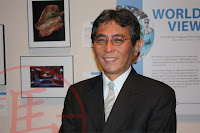
(Photo by Brian Mah. Published with permission)
Yoshihiro Shimizu is the general manager for Tezuka Productions Co., Ltd. Mr. Shimizu has been a consultant for over 30 years. He has been working for Tezuka Productions for the past decade.

(Provided by Rahi Chun. Unauthorized publication is prohibited.)
Rahi Chun has been acting professionally since 1992. He has worked on film and TV, such as "Scrubs" and "Dumb and Dumber." He is currently a producer in the Los Angeles area.

(Provided by Amy Howard Wilson. "Space Battleship Yamato" created by Leiji Matsumoto. Unauthorized publication is prohibited.)
Amy Howard Wilson has been voice acting for nearly 3 decades. Born in 1955, and bit by the acting bug in High School, Amy then attended The American Academy of Dramatic Arts, and graduated in 1975. She was fortunate to have been cast to voice the character of Nova in Star Blazers, but to also has been chosen to voice Miranda, in the Irresponsible Captain Tyler OVA. Amy now lives in Virginia, with her husband, Dave, and their 5 fabulous felines! Amy now records audio books from her home studio and for her company, Studio V.O.I.C.E.
---------------------------------
How long have you been a professional in your respected industry?
---------------------------------
Yoshihiro Shimizu: I've been a professional in my industry for the past decade.
Rahi Chun: I joined the Screen Actors Guild, our professional union, in 1992 via a commercial for Buick, and have worked in film, television and commercials ever since.
Amy Howard Wilson: Since 1979. Star Blazers was my first professional acting job.
---------------------------------
Who were your influences when you were growing as a professional?
---------------------------------
Yoshihiro Shimizu: Tezuka obviously.
Rahi Chun: When I was growing up, I had many influences, obviously my father and my mother and my sister being three. As far as influencing my draw to entertainment, my heroes growing up were all TV characters; the six million dollar man, Starsky and Hutch, etc. Once I began working, I was drawn to film actors such as Denzel Washington, Sean Penn, and Daniel Day Lewis.
Amy Howard Wilson: Lucille Ball and Angela Lansbury top the list. Not only because of their awesome talent, but also because of their career choices as actresses. I'm going to look back at the end of my career, and be equally proud!
---------------------------------
Have you seen any changes (positive or negative) since you first started?
---------------------------------
Yoshihiro Shimizu: The most positive changes is that anime has gained so much notoriety around the world. At the same time the negative changes are the mass merchandising of animated works. Many television broadcasters are trying to mass merchandise their products.
Rahi Chun: Since 1992, I'd say the playing field has been leveling, meaning today, no one blinks an eye when they see leading African American men or women playing lead roles on TV. In 1992, there was the token one minority in a cast of series regulars; today, there are many more shows that reflect reality as far as its diversity. We still have a long ways to go to really level the playing field; but there's been steady progress as more and more younger writers and producers and directors play key decision-making roles in story telling.
Amy Howard Wilson: Yes. Both. Anime has become big business in the US, and that has had mixed consequences. On the plus side, there has been work for many actors and actresses. On the minus side, very often there has been the sacrifice of quality in the quest for quantity, just to get the titles on the retail shelf.
---------------------------------
Have you met anyone famous?
---------------------------------
Yoshihiro Shimizu: Besides Tezuka, I got a chance to meet a wide variety of people. I had the pleasure to meet the Prime Minister of Japan. On the other hand I met some Yakuza when I was at a carnival. They were low level Yakuza in charge of organizing masks for vendors.
For industry people, I had the pleasure of meeting Osamu Dezaki and Rintaro. I briefly met the writer of Pluto, Naoki Urasawa.
Rahi Chun: When I was starting out, most of my scenes were with the leads of the movie or TV show I was shooting. In BHC III (Beverly Hills Cop 3), my scene was with Eddie Murphy, in Dumb and Dumber; it was with Jim Carrey, Ray Romano, Ellen Degeneres, Heather Locklear, Noah Wyle, etc. Today, some of my former acting classmates are well known celebrities; Heather Graham, Adam Scott, Poppy Montgomery, etc. And none of them are any different than you or me.
Amy Howard Wilson: Yes. Going to conventions has not only been tremendous fun for me as a guest, but I also had the pleasure of meeting Ray Harryhausen, the amazing stop-motion animation master.
---------------------------------
What kind of changes in technology have you seen over the years affect the way you did your work?
---------------------------------
Yoshihiro Shimizu: Changing from film to digital production was a huge change. In the past much of the key animation and background painting was done by hand. Now much of the production is done by the use of the computer. The animating film process before took over 10 people. Now it only takes 2 people.
Rahi Chun: The changes in technology over the years have really affected directors in giving a wider array of tools to tell the story, and producers as far as saving money, or spending more money in getting their films made. For actors, unless you specialize in simulated acting for effects films like Avatar, acting is always acting and I suspect that human element will always be at the heart of human story telling.
Amy Howard Wilson: Surprisingly, the fundamentals haven't changed all that much. Everyone goes in to the studio and records individually, with the script on a music stand, a mic, and a monitor, so you can see the animation. The biggest change is that now it's all done on computer, so if you don't quite match the lip flap, it can be corrected very easily, with a few keystrokes. 30 years ago, if you flubbed a line, the sound engineer would have to stop, rewind, and re-take.
---------------------------------
How has the invention of the Internet influenced the way you do business?
---------------------------------
Yoshihiro Shimizu: It made me a lot busier.
Rahi Chun: As an actor, it really hasn't very much. It affects the work of my agent and manager in the ways they submit me for work. The actor's demo reel has somewhat replaced the headshot in being considered for auditions, and those can be emailed to anyone in a moment. I was cast in MI:3 for a scene with Tom Cruise based on the casting director (who knew my work already) sharing my demo reel with the director. (The scene unfortunately, was ultimately cut from the final film). Doing research has become much easier; any show can be viewed to get a sense of its style and tone online now through Hulu or Netflix.
As a producer, communication and networking is highly facilitated by the research we can do on possible collaborators via the net. This is the case for anyone though in any industry.
Amy Howard Wilson: Amazingly! Not having animation production being done where we live, I was fortunate to find a lucrative alternative, doing audio books from my home studio, for my clients here in the states, and in Australia and Japan. I record the text, format the files as MP3 and ftp them where they need to go. When I get final approval on the completed work, I burn and package the CDs, or make them available as downloads.
---------------------------------
What kind of challenges has been the greatest impact on your industry?
---------------------------------
Yoshihiro Shimizu: For Japanese animation for instance there is a decrease in the production team. Key animation and inbetweening used to done by hand, that process is changing with the introduction of more digital equipment.
Rahi Chun: Well, the last several years have affected actors and the amount of work available as a result of the writers' strike two years ago, and then a pending actors' strike which followed, and then Jay Leno moving to prime time. Every three years the producers union re-negotiates contracts with the writers' and actors' unions covering key items such as residuals and our health and pension plans. Because so much content viewing is moving to the internet, the creative unions want to negotiate a residuals system that is comparable to current tv and film. This was the sticking point causing these recent strikes and almost strikes. Jay Leno moving to prime time meant five fewer shows per week for writers, directors, and actors. We are all glad the idea tanked.
Amy Howard Wilson: Probably the biggest challenge that is dealt with today is piracy. Whether you're talking about anime, music, whatever.... There are people who think that simply because they want it, they are entitled to take it, free of charge. Where I grew up, that was called theft. The result of this rampant thievery is that many artists are not creating new stuff. The impact on the industry has been described as "catastrophic", thanks to these criminals.
---------------------------------
Have the younger artists inspired you to strive to do better?
---------------------------------
Yoshihiro Shimizu: I admire young people who are not just talented, but can work in a team. There are many talented young artists.
Rahi Chun: As an artist, I always strive to create and inspire my own realm of artistry and process.
Amy Howard Wilson: No. I have always given 100% to my work, and will continue to do so. This is a very competitive business, and there is no room for complacency. I respect many of my fellow artists, both younger and older, and I will always give my work my best, as I'm sure they will.
---------------------------------
What kind of observations have you made with the current programs (TV, film, net, etc.) airing today?
---------------------------------
Yoshihiro Shimizu: Since I have been busy, I don't have a chance to see anything current. I try to see the latest work by Hayao Miyazaki. To be honest I don't remember the last animated series I watched.
Rahi Chun: There's a lot of good television writing out there, particularly on the cable networks. That's inspiring. Unique stories told in unique ways. Creativity is always inspiring when it's given the freedom to really be explored and trusted.
Unfortunately, that has all but died in the realm of film today. All the studios are banking on formulaic comic hero movies, and they are predictable and formula driven to cater to the least common denominator in audiences. All of the human drama films have disappeared with the prestige mini studios that used to create them; Miramax, Paramount Vantage, Warner Independent Pictures. Except for during awards season, when a few get to squeak through like a Precious or Hurt Locker.
Amy Howard Wilson: With few exceptions, I find the majority of what I've seen in recent years to be absolute rubbish. So often, things like style, creativity, a good story, and good characterizations have been abandoned, in favor of the worn out, lame, smarmy tactic - just because "it sells". The whole concept makes me ill. My husband and I no longer have cable TV, for this very reason.
---------------------------------
What advice would you give to someone who wants to go into your respected industries?
---------------------------------
Yoshihiro Shimizu: Spread out your antennas out and always look for new ideas. Present yourself in a professional manor. Be courteous, basic things. Be aware of what you don't know. Don't be a "know-it all."
Most importantly, be curious about what you want to do. Don't be lazy when you research for a topic. Hard work pays off in the long run.
Rahi Chun: Follow your Heart. Make sure it's your Heart and not your Head or Ego. You have to love what you do in life. And do it fully.
Amy Howard Wilson: Keep your feet on the ground, and your head in the clouds. In other words, treat this as a business, with all that that entails, but never lose the passion and enthusiasm for your work. If you're in school, stay there. Do NOT quit, just to be a famous actress or actor.
If you can't necessarily audition and get cast in the role of a lifetime right off the bat, start from where you are. Get involved in your school drama club, Community Theater or perhaps your local radio station. When Star Blazers came along, I was doing clerical work at an acting school in New York. This business is unlike many others, because you'll find work in the most unlikely ways.
Most importantly, NEVER compromise your values, just because it'll mean a paycheck. More often than not, people who do, end up broke and forgotten about. Years from now, when you look back on your career, you want to be able to hold your head up and be proud. I wish you great success!
With an ever changing entertainment industry has many perils. Unfortunately the internet and media have a wide volume of people talking with inflated egos. It is good to know that there are still those still follow the old skill of observing, listening, and speaking something meaningful.
Check your ego out the door.
Putting the writer's words and the artist's vision together is the responsibility of production creators. Actors/Actresses give the writer's words a voice by bringing to life through their interpretation of what the writer wanted to say. Directors, Editors, and camera operators bring an artist's renderings to life.

(Photo by Brian Mah. Published with permission)
Yoshihiro Shimizu is the general manager for Tezuka Productions Co., Ltd. Mr. Shimizu has been a consultant for over 30 years. He has been working for Tezuka Productions for the past decade.

(Provided by Rahi Chun. Unauthorized publication is prohibited.)
Rahi Chun has been acting professionally since 1992. He has worked on film and TV, such as "Scrubs" and "Dumb and Dumber." He is currently a producer in the Los Angeles area.

(Provided by Amy Howard Wilson. "Space Battleship Yamato" created by Leiji Matsumoto. Unauthorized publication is prohibited.)
Amy Howard Wilson has been voice acting for nearly 3 decades. Born in 1955, and bit by the acting bug in High School, Amy then attended The American Academy of Dramatic Arts, and graduated in 1975. She was fortunate to have been cast to voice the character of Nova in Star Blazers, but to also has been chosen to voice Miranda, in the Irresponsible Captain Tyler OVA. Amy now lives in Virginia, with her husband, Dave, and their 5 fabulous felines! Amy now records audio books from her home studio and for her company, Studio V.O.I.C.E.
---------------------------------
How long have you been a professional in your respected industry?
---------------------------------
Yoshihiro Shimizu: I've been a professional in my industry for the past decade.
Rahi Chun: I joined the Screen Actors Guild, our professional union, in 1992 via a commercial for Buick, and have worked in film, television and commercials ever since.
Amy Howard Wilson: Since 1979. Star Blazers was my first professional acting job.
---------------------------------
Who were your influences when you were growing as a professional?
---------------------------------
Yoshihiro Shimizu: Tezuka obviously.
Rahi Chun: When I was growing up, I had many influences, obviously my father and my mother and my sister being three. As far as influencing my draw to entertainment, my heroes growing up were all TV characters; the six million dollar man, Starsky and Hutch, etc. Once I began working, I was drawn to film actors such as Denzel Washington, Sean Penn, and Daniel Day Lewis.
Amy Howard Wilson: Lucille Ball and Angela Lansbury top the list. Not only because of their awesome talent, but also because of their career choices as actresses. I'm going to look back at the end of my career, and be equally proud!
---------------------------------
Have you seen any changes (positive or negative) since you first started?
---------------------------------
Yoshihiro Shimizu: The most positive changes is that anime has gained so much notoriety around the world. At the same time the negative changes are the mass merchandising of animated works. Many television broadcasters are trying to mass merchandise their products.
Rahi Chun: Since 1992, I'd say the playing field has been leveling, meaning today, no one blinks an eye when they see leading African American men or women playing lead roles on TV. In 1992, there was the token one minority in a cast of series regulars; today, there are many more shows that reflect reality as far as its diversity. We still have a long ways to go to really level the playing field; but there's been steady progress as more and more younger writers and producers and directors play key decision-making roles in story telling.
Amy Howard Wilson: Yes. Both. Anime has become big business in the US, and that has had mixed consequences. On the plus side, there has been work for many actors and actresses. On the minus side, very often there has been the sacrifice of quality in the quest for quantity, just to get the titles on the retail shelf.
---------------------------------
Have you met anyone famous?
---------------------------------
Yoshihiro Shimizu: Besides Tezuka, I got a chance to meet a wide variety of people. I had the pleasure to meet the Prime Minister of Japan. On the other hand I met some Yakuza when I was at a carnival. They were low level Yakuza in charge of organizing masks for vendors.
For industry people, I had the pleasure of meeting Osamu Dezaki and Rintaro. I briefly met the writer of Pluto, Naoki Urasawa.
Rahi Chun: When I was starting out, most of my scenes were with the leads of the movie or TV show I was shooting. In BHC III (Beverly Hills Cop 3), my scene was with Eddie Murphy, in Dumb and Dumber; it was with Jim Carrey, Ray Romano, Ellen Degeneres, Heather Locklear, Noah Wyle, etc. Today, some of my former acting classmates are well known celebrities; Heather Graham, Adam Scott, Poppy Montgomery, etc. And none of them are any different than you or me.
Amy Howard Wilson: Yes. Going to conventions has not only been tremendous fun for me as a guest, but I also had the pleasure of meeting Ray Harryhausen, the amazing stop-motion animation master.
---------------------------------
What kind of changes in technology have you seen over the years affect the way you did your work?
---------------------------------
Yoshihiro Shimizu: Changing from film to digital production was a huge change. In the past much of the key animation and background painting was done by hand. Now much of the production is done by the use of the computer. The animating film process before took over 10 people. Now it only takes 2 people.
Rahi Chun: The changes in technology over the years have really affected directors in giving a wider array of tools to tell the story, and producers as far as saving money, or spending more money in getting their films made. For actors, unless you specialize in simulated acting for effects films like Avatar, acting is always acting and I suspect that human element will always be at the heart of human story telling.
Amy Howard Wilson: Surprisingly, the fundamentals haven't changed all that much. Everyone goes in to the studio and records individually, with the script on a music stand, a mic, and a monitor, so you can see the animation. The biggest change is that now it's all done on computer, so if you don't quite match the lip flap, it can be corrected very easily, with a few keystrokes. 30 years ago, if you flubbed a line, the sound engineer would have to stop, rewind, and re-take.
---------------------------------
How has the invention of the Internet influenced the way you do business?
---------------------------------
Yoshihiro Shimizu: It made me a lot busier.
Rahi Chun: As an actor, it really hasn't very much. It affects the work of my agent and manager in the ways they submit me for work. The actor's demo reel has somewhat replaced the headshot in being considered for auditions, and those can be emailed to anyone in a moment. I was cast in MI:3 for a scene with Tom Cruise based on the casting director (who knew my work already) sharing my demo reel with the director. (The scene unfortunately, was ultimately cut from the final film). Doing research has become much easier; any show can be viewed to get a sense of its style and tone online now through Hulu or Netflix.
As a producer, communication and networking is highly facilitated by the research we can do on possible collaborators via the net. This is the case for anyone though in any industry.
Amy Howard Wilson: Amazingly! Not having animation production being done where we live, I was fortunate to find a lucrative alternative, doing audio books from my home studio, for my clients here in the states, and in Australia and Japan. I record the text, format the files as MP3 and ftp them where they need to go. When I get final approval on the completed work, I burn and package the CDs, or make them available as downloads.
---------------------------------
What kind of challenges has been the greatest impact on your industry?
---------------------------------
Yoshihiro Shimizu: For Japanese animation for instance there is a decrease in the production team. Key animation and inbetweening used to done by hand, that process is changing with the introduction of more digital equipment.
Rahi Chun: Well, the last several years have affected actors and the amount of work available as a result of the writers' strike two years ago, and then a pending actors' strike which followed, and then Jay Leno moving to prime time. Every three years the producers union re-negotiates contracts with the writers' and actors' unions covering key items such as residuals and our health and pension plans. Because so much content viewing is moving to the internet, the creative unions want to negotiate a residuals system that is comparable to current tv and film. This was the sticking point causing these recent strikes and almost strikes. Jay Leno moving to prime time meant five fewer shows per week for writers, directors, and actors. We are all glad the idea tanked.
Amy Howard Wilson: Probably the biggest challenge that is dealt with today is piracy. Whether you're talking about anime, music, whatever.... There are people who think that simply because they want it, they are entitled to take it, free of charge. Where I grew up, that was called theft. The result of this rampant thievery is that many artists are not creating new stuff. The impact on the industry has been described as "catastrophic", thanks to these criminals.
---------------------------------
Have the younger artists inspired you to strive to do better?
---------------------------------
Yoshihiro Shimizu: I admire young people who are not just talented, but can work in a team. There are many talented young artists.
Rahi Chun: As an artist, I always strive to create and inspire my own realm of artistry and process.
Amy Howard Wilson: No. I have always given 100% to my work, and will continue to do so. This is a very competitive business, and there is no room for complacency. I respect many of my fellow artists, both younger and older, and I will always give my work my best, as I'm sure they will.
---------------------------------
What kind of observations have you made with the current programs (TV, film, net, etc.) airing today?
---------------------------------
Yoshihiro Shimizu: Since I have been busy, I don't have a chance to see anything current. I try to see the latest work by Hayao Miyazaki. To be honest I don't remember the last animated series I watched.
Rahi Chun: There's a lot of good television writing out there, particularly on the cable networks. That's inspiring. Unique stories told in unique ways. Creativity is always inspiring when it's given the freedom to really be explored and trusted.
Unfortunately, that has all but died in the realm of film today. All the studios are banking on formulaic comic hero movies, and they are predictable and formula driven to cater to the least common denominator in audiences. All of the human drama films have disappeared with the prestige mini studios that used to create them; Miramax, Paramount Vantage, Warner Independent Pictures. Except for during awards season, when a few get to squeak through like a Precious or Hurt Locker.
Amy Howard Wilson: With few exceptions, I find the majority of what I've seen in recent years to be absolute rubbish. So often, things like style, creativity, a good story, and good characterizations have been abandoned, in favor of the worn out, lame, smarmy tactic - just because "it sells". The whole concept makes me ill. My husband and I no longer have cable TV, for this very reason.
---------------------------------
What advice would you give to someone who wants to go into your respected industries?
---------------------------------
Yoshihiro Shimizu: Spread out your antennas out and always look for new ideas. Present yourself in a professional manor. Be courteous, basic things. Be aware of what you don't know. Don't be a "know-it all."
Most importantly, be curious about what you want to do. Don't be lazy when you research for a topic. Hard work pays off in the long run.
Rahi Chun: Follow your Heart. Make sure it's your Heart and not your Head or Ego. You have to love what you do in life. And do it fully.
Amy Howard Wilson: Keep your feet on the ground, and your head in the clouds. In other words, treat this as a business, with all that that entails, but never lose the passion and enthusiasm for your work. If you're in school, stay there. Do NOT quit, just to be a famous actress or actor.
If you can't necessarily audition and get cast in the role of a lifetime right off the bat, start from where you are. Get involved in your school drama club, Community Theater or perhaps your local radio station. When Star Blazers came along, I was doing clerical work at an acting school in New York. This business is unlike many others, because you'll find work in the most unlikely ways.
Most importantly, NEVER compromise your values, just because it'll mean a paycheck. More often than not, people who do, end up broke and forgotten about. Years from now, when you look back on your career, you want to be able to hold your head up and be proud. I wish you great success!
With an ever changing entertainment industry has many perils. Unfortunately the internet and media have a wide volume of people talking with inflated egos. It is good to know that there are still those still follow the old skill of observing, listening, and speaking something meaningful.
Check your ego out the door.
Subscribe to:
Posts (Atom)
